A Wicketkeeper Standing Up or Back: What Changes?
Wicketkeeper standing up or back changes which chances are reachable. Learn how pace, bounce and batter movement shape the keeper’s position and the risks it brings.
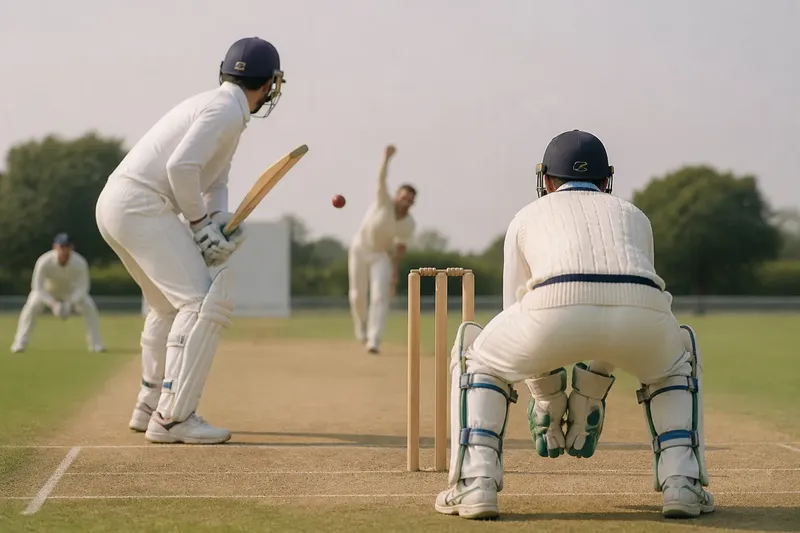
The common mistake when watching a wicketkeeper is to treat “up” and “back” as fixed jobs: close to the stumps means spin, farther away means pace. That shortcut can obscure the cost of a poor fit: a keeper may be too far away to take a sharp chance or so close that a fast, rising ball leaves little time to react. Wicketkeeper standing up or back is a choice shaped by the delivery, the surface and the batter’s movement.
For a reader in the stands, the useful question is not simply where the keeper is standing, but what kind of ball the bowler is trying to make difficult. The position changes the keeper’s time, reach and view of the stumps, and it can alter which dismissals are realistic.
The close position
Standing up means the keeper sets close behind the stumps, generally with a small gap between gloves and wicket. It is most associated with slower bowling, especially spin, because the ball may travel at a pace that gives the keeper time to gather it and act quickly.
That proximity matters when a batter comes forward and misses. If the keeper takes the ball cleanly, the gloves are already near the stumps for a stumping attempt. The same position can help with a thin edge off a slower delivery, though an edge is never assured by the keeper’s location.
The close stance also makes the keeper part of the pressure. A batter may hesitate before leaving the crease or advancing, knowing that a missed ball could be gathered beside the wicket. The keeper’s position can influence movement even before it produces a catch or stumping.
But closeness has a price. A ball that turns sharply, bounces unexpectedly or takes an edge may arrive at an awkward height or angle, leaving little time to adjust. If the keeper is too close for the pace and bounce on offer, a chance can pass behind or beside the gloves.
The deeper position
Standing back means the keeper moves farther behind the stumps, creating more room to react to a quicker delivery. That extra space can be useful against pace, particularly when the ball may rise or carry through at speed.
From deeper back, the keeper is better placed to take edges that travel quickly and to deal with deliveries that pass the batter without being played. The position also gives the keeper more time to read movement off the pitch. It does not remove the difficulty of a late deviation, but it can make the ball more manageable.
The trade-off is distance from the wicket. If a batter charges down the pitch and misses, the keeper must collect and bring the ball back to the stumps from farther away. A stumping may still be possible, but the extra movement can give the batter more time to recover ground.
Think of the choice like catching keys: stand close for quick access, or step back to give yourself more room to react to a faster throw. Neither position suits every delivery.
Reading the delivery
To understand the keeper’s decision, watch for cues that change the ball’s likely journey. A spinner’s slower pace can make a close position practical; a fast bowler’s speed and bounce often favour more room. The pitch matters too: uneven bounce may make a safer distance different from one ball to the next.
The batter’s method can shift the balance. A player who often advances against spin increases the value of having the keeper near the stumps. A batter who stays deep and attacks fast bowling may make a back position more useful for taking edges and controlling balls that carry through.
These are tendencies, not rigid rules. A keeper can adjust within an over or even between deliveries, and the captain and bowler may have a view on the fielding plan. For a spectator, a small change in the keeper’s depth can hint that the expected pace, bounce or batter movement has changed.
What does the position change?
When is a keeper likely to stand up?
A keeper is more likely to come close when the bowler delivers slowly enough for a clean take and the batter may leave the crease. Spin often creates that opportunity, especially when the bowler is trying to tempt a forward movement or a miss.
Why stand back to a fast bowler?
A deeper position allows more time to respond to pace, bounce and edges that carry quickly. The keeper can track the ball’s path with more room to move, though the extra distance from the stumps can make a stumping harder.
Can a keeper change position between balls?
Yes. The keeper may move closer or farther away as the bowler changes pace or line, or as the batter changes their approach to the crease. Watch the setup before each delivery rather than assuming the position will remain the same throughout an over.
Does standing up make a stumping certain?
No. The keeper still has to gather the ball cleanly and remove the bails while the batter is out of the crease. A close position reduces the distance to the wicket, but a poor take, a deflection or the batter’s recovery can defeat the attempt.
A match-watching routine
Use a short routine over a few overs to see the decision in context rather than judging it from one ball. First note the bowler’s type and apparent pace. Then watch where the keeper sets up, how the ball carries and whether the batter advances, stays back or plays across the line.
- Before the ball: Check the keeper’s gap from the stumps and stance; if the keeper is close, look for a plan to challenge a batter’s movement, but if the ball appears likely to carry quickly, watch for a deeper setup.
- At release: Observe the delivery’s pace, line and trajectory; if it is slow, note whether the keeper can move closer, but if it is fast, consider whether the extra reaction room of standing back is useful.
- After the bounce: Track whether the ball turns, stays low, rises or carries through; if it behaves as the keeper’s position anticipates, that depth may suit the next delivery, but if it creates an awkward take, look for an adjustment.
- At the batter’s crease: Notice whether the batter moves forward or remains back; if the batter advances, a keeper near the stumps may have a quicker stumping chance, but if the batter stays deep, a back position may better suit edges and carry.
- Between deliveries: Compare the keeper’s position after a change in bowler, pace or batter movement; if the problem has changed, look for a corresponding adjustment, but if the setup stays fixed, watch how the keeper manages the same risk.
- After a miss or edge: Observe how far the keeper must move to gather and return the ball; if the distance delays a stumping attempt, a closer position may help against a similar delivery, but if the ball is difficult to control close in, more depth may be preferable.
Say you are watching a spinner and, for this invented situation, the batter has stepped down the pitch twice. The keeper moves close; on the next delivery, the batter advances again and misses, and the keeper gathers the ball beside the stumps. The observable result is that the keeper can attempt a stumping with little travel, so the close position suits the batter’s movement. If the same bowler instead sends the ball sharply past the outside edge with extra bounce, the close stance makes the take harder; the trade-off is immediate access to the wicket against less room to react.
Reading the keeper’s intent
Once the pattern becomes visible, the keeper’s position offers a tactical clue. Standing up can signal that the bowling plan values pressure on a batter’s movement and a quick chance at the stumps. Standing back can signal greater concern with pace, bounce or edges travelling through.
When you watch wicketkeeper standing up or back, keep the delivery and batter in view together. The position is a compromise between reaction time and distance to the wicket; its meaning becomes clearest in the way the next ball is expected to behave.