Your First Day Following a Test Match
Your first day following a Test match is easier when you track one batter-bowler contest and use each session break to reset your attention.
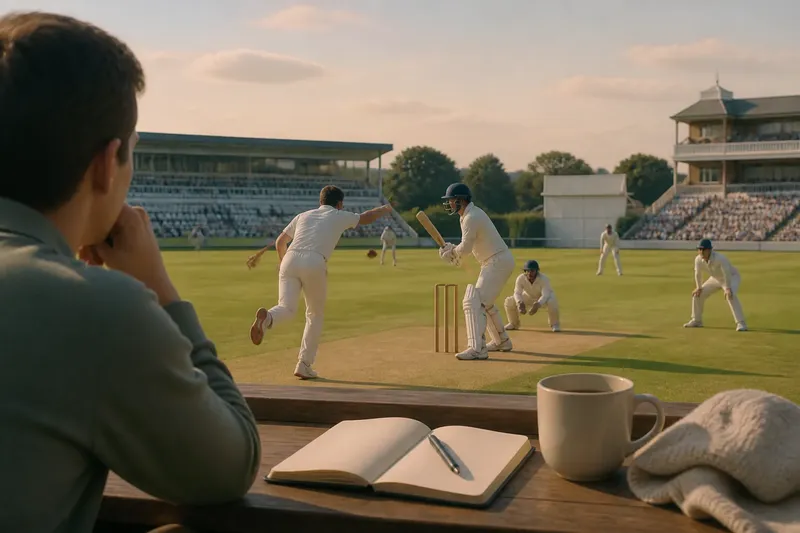
The common mistake on your first day following a Test match is trying to watch every fielder, statistic and tactical change at once. The cost is that the small contest giving those details meaning slips past while you collect them. Start with one batter facing one bowler, then add only what helps you follow that exchange.
Choose your viewing mode
A Test day has natural pauses, but the play between them can feel busy without a point of focus. Pick an approach that suits the moment; you can change it at the next session break.
- If you are new to cricket: follow one batter-bowler contest. Watch where the bowler pitches the ball, what the batter does, and whether the next delivery changes the problem. If you can describe that sequence, stay with it; if not, narrow your attention to whether the batter plays or leaves.
- If you are watching with an experienced fan: ask them to name the immediate question, such as whether the batter can leave balls outside off stump or whether the bowler is trying to draw a drive. If the question helps you notice a choice, follow it; if it turns into a long explanation, return to the next delivery.
- If you are joining partway through: check the score, wickets lost and batters at the crease. If those details show you who is in and the state of the innings, watch a few deliveries; if they do not, ask for a brief update rather than reconstructing every earlier over.
- If you are listening while doing something else: use commentary to follow changes in the contest. If a wicket, new batter or bowling change shifts the situation, look at the screen; if nothing has changed, keep listening without trying to watch every ball.
The right choice is the one that lets you notice a change. It is like following one exchange in a chess game instead of trying to memorize every piece: a local decision can make the wider position easier to understand.
Follow one contest
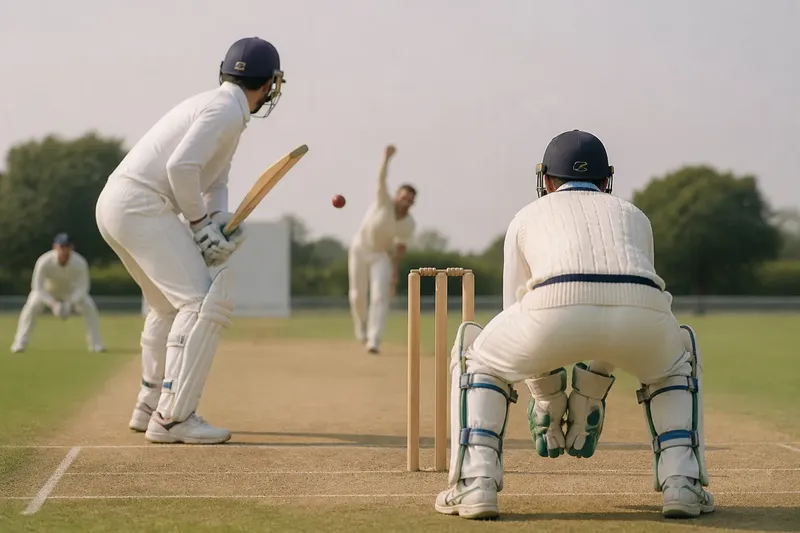
Choose the batter currently facing and the bowler delivering the over. Notice the line and length, the batter’s response, and whether the bowler repeats or adjusts the approach. A leave, a defensive shot and a boundary each tell you something about the space both players are trying to control.
You do not need to label every delivery. Ask a plain question instead: did the ball make the batter play, or could the batter safely leave it? Then watch how the bowler responds. The bowler may keep probing the same area, vary the pace or aim toward the stumps; the batter may defend, attack or move out of the way.
The score helps, but it does not tell the whole story. A quiet stretch can still carry tension if the bowler repeatedly makes the batter judge a difficult line. A scoring shot may ease pressure for the moment without ending the contest.
Say you arrive as a right-handed batter faces a fast bowler who keeps pitching outside off stump. The batter leaves two deliveries, then edges the next safely along the ground. The useful observation is not a prediction about the innings; it is a question for the next ball: will the bowler keep targeting that line, and will the batter keep leaving?
Use the score wisely
Keep a small set of details in view: runs, wickets lost, overs completed and the names of the batters in. If the runs are rising while wickets remain intact, the side is building; if wickets are falling, the innings may be under pressure. Either way, treat the score as a map, not a substitute for watching how events unfold.
When a new batter arrives, notice the changed pairing. The established batter may be settled while the newcomer is still judging pace and bounce. If the bowler has just taken a wicket, watch whether the new batter begins defensively or takes an early scoring option.
Do not treat every unfamiliar number as an urgent puzzle. If a score graphic includes a batter’s average, a bowling figure or a projected total, set it aside until you know what question it might answer. For a first day, the score and wickets lost are usually enough to orient you between deliveries.
Reset at the break
A session break is a useful boundary, not a test of whether you followed everything. Pause, stretch, get a drink or step away from the screen. When play resumes, check who is batting and bowling, then choose one fresh question.
After a break, for instance, you might focus on whether a new bowler continues the previous line or tries a different one. You could instead follow a batter who has just returned to the crease, if that is the clearest change. Either choice gives you a starting point without requiring you to replay every over in your head.
If you missed part of the session, use the score and a brief update to catch the essentials: the current batters, wickets lost and any recent change that explains the situation. You can return to the match as it stands rather than reconstructing every delivery.
Which approach fits?
What should I watch if I know nothing about cricket?
Watch whether the batter plays, leaves or misses each ball, and whether the bowler changes the line or length. If specialist terms get in the way, stay with those visible choices until they make sense.
Should I follow the score or the ball?
Use the score to understand the innings and the ball to understand how it is unfolding. If you can focus on only one, follow the deliveries and check the score at a natural pause.
What if I miss a wicket?
Look at the score, identify the incoming batter and notice who is bowling. That new pairing gives you a practical way back into the match without needing a full replay.
How much should I rely on commentary?
Use commentary to clarify an unfamiliar decision or describe a change you did not see. If the explanation connects to something visible, keep it in mind; otherwise, return your attention to the next delivery.
Return with a question
Your first day following a Test match can include pauses and missed overs. When you return, check the score, identify the batter and bowler, and ask what has changed since you last watched. That gives you a clear place to pick up the contest without carrying every earlier detail forward.